


Australian High Court Blocks Coal Mine Expansion Over Emissions
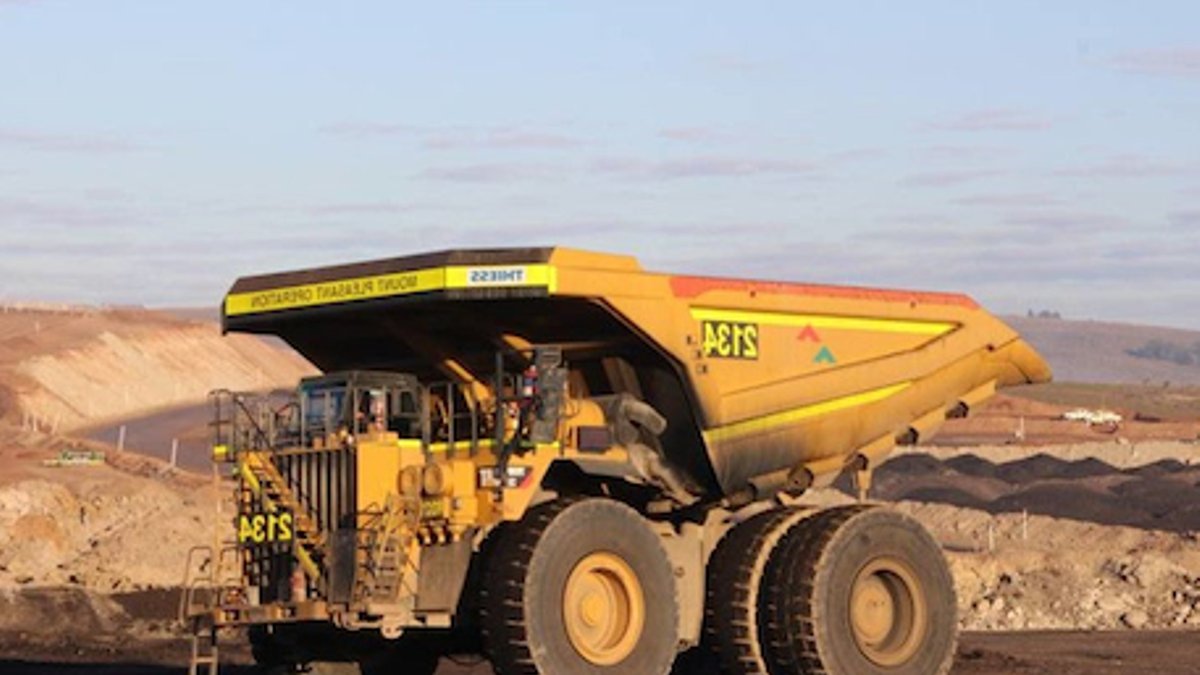
Australia’s High Court ruled on Wednesday that planning authorities must consider the emissions from burning coal even when the fuel is exported overseas, effectively halting an expansion of the Mount Pleasant coal mine in the Hunter Valley. This decision, which saw three of five judges side with environmental campaigners, marks a significant shift in climate law, as it mandates that all greenhouse gas emissions from fossil fuel projects be factored into environmental assessments.
Australia, a major player in the global coal market, sourced more than a third of the world’s coal exports last year and was the world’s largest coal exporter by value, though it ranks second behind Indonesia in export volume. These exports, originating from mines in all states except South Australia, generated $43.7 billion in 2025 for coal mining companies.
Historic Ruling
The case centered on Mach Energy’s bid to extend the life of the open-cut Mount Pleasant mine near Muswellbrook by over 20 years, until 2048. The company argued that coal exported abroad could not be directly linked to local environmental impacts in the Hunter Valley. However, the court dismissed this, finding that the state’s planning commission failed to consider imposing conditions that would limit emissions “to the greatest extent practicable”.
Lawyer Anita O’Hart described the ruling as “historic,” emphasizing its broader implications for climate considerations nationwide. Retired science teachers Wendy Wales and Tony Lonergan, who spearheaded the legal battle, celebrated the decision, with Wales stating, “We cannot dig up coal, ship it overseas, watch it drive climate change, and then pretend the consequences have nothing to do with us.”
“This ruling will be applied by courts and planning authorities across Australia, and it will be studied internationally as one of the most significant domestic climate law decisions in the world,” O’Hart said. The ruling follows years of legal battles, with Wales and Lonergan initially halting the project in lower courts before Mach Energy appealed to the High Court.
Read Also: Asia’s Power Grid Inequity Slows Renewable Shift
Global Context Amid Climate Commitments
Australia’s role as a major coal exporter complicates its position as it prepares to lead the UN’s climate summit in November. While the country promotes clean energy initiatives, including a 2035 target to cut emissions by 62-70% below 2005 levels, it also faces rising global coal demand. The International Energy Agency projects a 1.2% increase in global coal demand to a record 8.94 billion tonnes in 2026, contradicting earlier predictions of decline. This surge challenges Australia’s climate diplomacy efforts, particularly as it seeks to mobilize funding for vulnerable nations at COP31 in Turkey. Since 2020, Australia has delivered Aus$3.9 billion ($2.7 billion) in climate finance and pledged $2 million for infrastructure projects in Pacific island states.
Pacific Nations Seek Climate Aid
During pre-COP31 meetings in Fiji, Pacific leaders urged wealthy nations for increased financial support to combat climate change. A UN report released in August revealed that developing countries need $310 billion to $365 billion for adaptation but had only $26 billion available in 2023. The Pacific Resilience Facility, aiming to raise $500 million, has secured less than half its target. Fiji pledged an additional $10 million, with Climate Minister Lynda Tabuya calling for simplified and expedited distribution of climate funds. Australia committed $2 million for infrastructure projects in Papua New Guinea, Fiji, Kiribati, and Tuvalu.
Global Markets React to Mideast Tensions
Oil prices rose amid concerns over Middle East supplies, driven by Iran’s increased attacks in the Strait of Hormuz. Crude futures had steadied on Tuesday, supporting Wall Street’s highs, with significant backing from the AI trade, which saw Nvidia approach a $6-trillion market value. Oil prices remain above $100 a barrel, with clear inflation risks.
European investors adopted a cautious stance, while Indian stocks dipped following a central bank interest rate hike. The euro weakened against the dollar due to France’s debt concerns. Key indices showed mixed results, with the Dow up 0.5% and Brent crude rising 1.2% to $101.77 per barrel. West Texas Intermediate also rose 0.5% to $89.89 per barrel, and the dollar/yen exchange rate increased to 158.30 yen.
Key Figures at Around 1030 GMT
London – FTSE 100: DOWN 0.7% at 10,467.36 points.
Paris – CAC 40: DOWN 1.1% at 7,779.82.
Tokyo – Nikkei 225: DOWN 0.9% at 70,035.71 (close).
Hong Kong – Hang Seng Index: DOWN 0.6% at 24,130.50 (close).
New York – Dow: UP 0.5% at 51,521.28 (close).


