


Two trained kumki elephants deployed in Parvathipuram
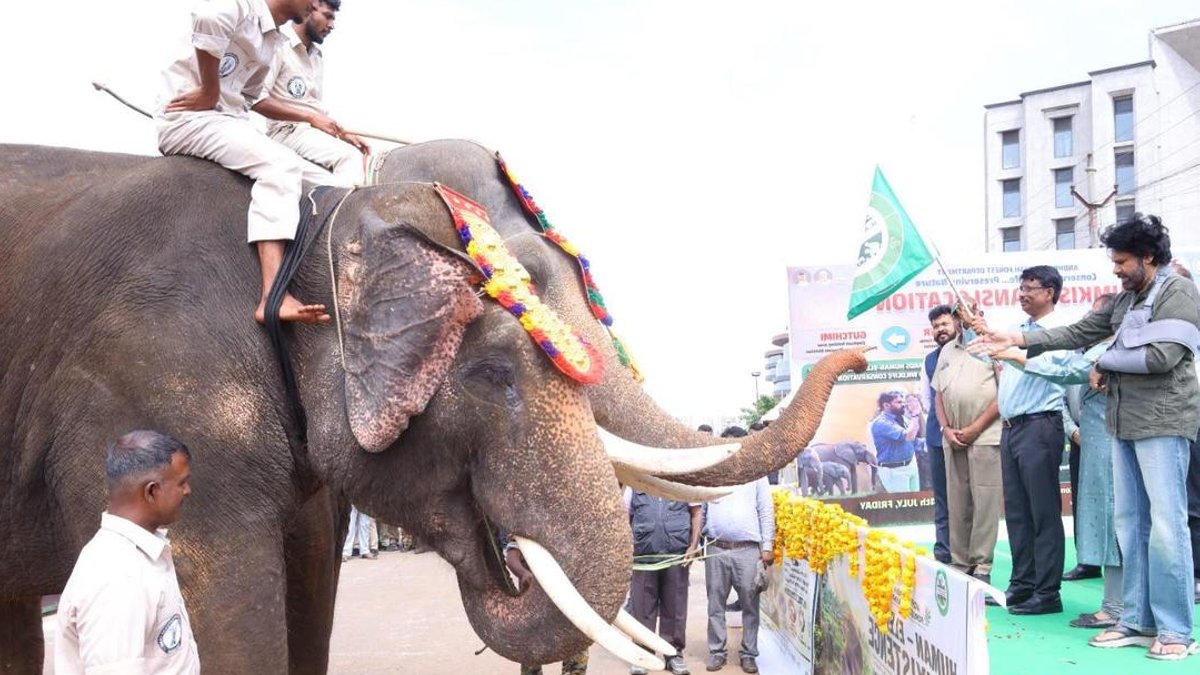
Two trained kumki elephants, Jayanth and Abhimanyu, were dispatched to the Guchchimi Elephant Camp in Parvathipuram Manyam district on Friday as part of the state’s plan to curb human‑elephant conflict.
Official ceremony and transfer
Deputy Chief Minister and Minister for Forests and Environment K. Pawan Kalyan met the animals at a transit point in Mangalagiri. He placed flower garlands on the pair, offered them food and then sent them on the second leg of their journey toward the camp.
The duo is being moved from the Musalamadugu Elephant Camp in Palamaner. Officials were instructed to oversee a safe move and to monitor the herd as they adjust to their new environment. The government highlighted the need for expert supervision once the elephants arrive.
Purpose of the deployment
Forest Department staff report that wild herds often cross the Odisha border into Parvathipuram Manyam, where they damage fields and homes. By deploying trained kumki elephants, authorities hope to steer those herds away from settlements and back into forested zones.
The department said the pair has previously taken part in similar operations in the Palamaner and Chittoor areas. Their role typically involves guiding larger groups of wild elephants, using their familiar presence to encourage movement toward designated corridors.
In practice, forest rangers will accompany the kumki animals when they encounter a stray herd. The trained animals can signal the wild group, prompting it to move without forceful measures.
The initiative reflects the coalition government’s stated aim of protecting lives, preserving crops, and conserving wildlife through methods deemed scientific and humane.
Related: Supreme Court: Pellet guns part of graded police response
Success will depend on how quickly the elephants adapt to the new terrain and how effectively rangers can coordinate their movements. If they settle well, the strategy could reduce the frequency of crop raids.
Local farmers have expressed cautious optimism. Previous deployments in neighboring districts yielded mixed results.
Some reported fewer incidents; others saw only short‑term relief.
Forest officials said the deployment will be monitored closely, with periodic assessments to gauge its effectiveness. They plan to adjust tactics based on field observations and feedback from the communities most affected.
In the coming weeks, the department will track health and behavior, ensuring proper nutrition and veterinary care. Ongoing oversight is intended to prevent unintended stress on the kumki elephants.
Overall, the move aims to create a more predictable pattern of elephant movement, reducing the likelihood of surprise encounters that can lead to damage or danger.

Supreme Court: Pellet guns part of graded police response


