


Buru books maiden reserve to fuel WA Rafael ambitions
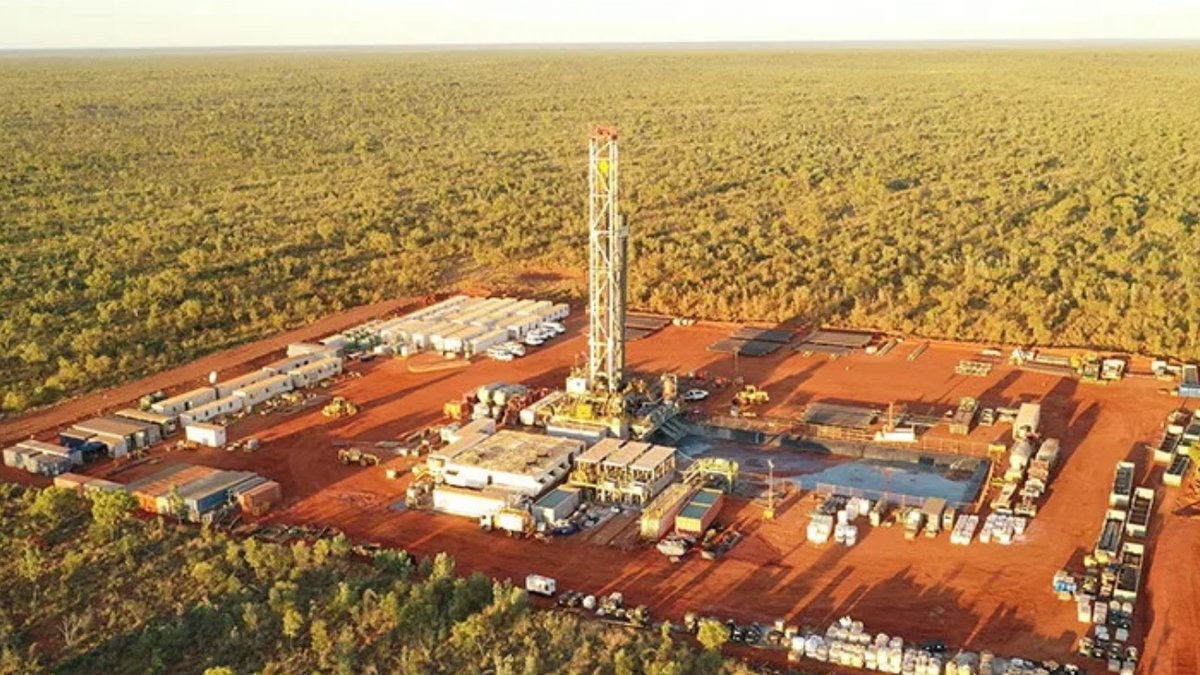
Buru Energy has booked a maiden independent assessment of reserves for its 100 per cent-owned Rafael gas-condensate field in Western Australia’s Canning Basin, a milestone that provides the company with concrete figures to secure funding and advance the project toward a final investment decision. The independent report, compiled by energy consultancy Sproule ERCE, outlines proved and probable (2P) reserves of 15.25 million barrels of oil equivalent (MMboe). The resource comprises 65.7 billion cubic feet (Bcf) of sales gas, 98.5 kilotonnes of liquefied petroleum gases (LPG’s) and 2.9 million stock tank barrels (MMstb) of valuable condensate. This specific resource breakdown demonstrates the field’s capability to deliver a diverse mix of energy products rather than a single commodity stream.
Building the business case
The company also booked proved (1P) reserves of 5.28 MMboe, providing a robust foundation for the project’s economics. For an energy junior such as Buru, moving a discovery from a resource to a reserve is a major step. It signifies that the gas and liquids are not only technically recoverable, but crucially, they are also commercially viable, a distinction that is key to attracting project financing and potential partners. Management says confirmation of reserves now underpins a two-well development strategy for the project, roughly 100 kilometres east of Broome. This specific geographic positioning is advantageous for logistics and allows the project to tap into existing infrastructure where possible.
Read Also: Lessons learned from two decades of relationships
The plan involves two horizontal wells, Rafael 1H and 2H, feeding a modular LNG and liquids processing facility. Buru is aiming to drill and test the wells in 2027, followed by facility construction in 2028 and a target of first sales by early 2029. Under a savvy commercial arrangement, Buru says its partner Clean Energy Fuels Australia (CFEA) will build, own and operate the midstream plant, limiting Buru’s major capital outlay to the upstream wells. This structure mitigates the financial risk for Buru, allowing the junior company to concentrate its resources on exploration and appraisal activities while a partner handles the expensive infrastructure build.
Scaling the operation
Notably, while the initial development is based on the 2P reserves, the real potential for Rafael appears to lie in its future growth. Sproule ERCE has also defined a substantial unrisked Contingent Resource (2C) of 21.24MMboe, which includes a hefty 105.7Bcf of gas and 2.7MMstb of condensate. This contingent resource, which comfortably eclipses the initial 2P reserve, lays out a clear growth runway for Rafael through additional wells, compression and an extended facility life.
The sheer volume of this upside suggests the company isn’t just looking at a one-off production stream, but a long-term asset capable of expanding output as technology and market conditions shift. The inclusion of gas and condensate in this figure highlights the potential for multi-product revenue streams as production ramps up.
Read Also: Australia’s hidden women’s health crisis costs billions
The proposed CFEA facility is designed to produce 300 tonnes of liquid natural gas (LPG) per day, with the LPG and condensate products destined for regional markets in the Kimberley, where fuel is currently trucked in at significant cost from the Pilbara or further afield. This logistical constraint means that every additional barrel of product extracted locally has a direct impact on regional energy economics, potentially lowering prices and improving reliability for remote communities and industries. The establishment of a local processing hub helps insulate the Kimberley region from the volatility of global fuel markets and the logistical bottlenecks that currently plague the supply chain.
Market access and outlook
Adding some welcome tailwinds for WA’s gas sector, Canberra’s watering down of its national gas reservation plan yesterday could play nicely into Buru Energy’s hands. With the draft recognising WA as a separate gas market and potentially allowing its federal obligation to fall to zero, Buru’s Raphael gas discovery could dodge another regulatory hurdle as the company hunts a commercial pathway into WA’s domestic market.
Read Also: Godwin Aigbokhan Spotlighted as Canada’s Trade Commissioner
This regulatory clarity is essential for investors who need to see a clear, stable path to monetisation without the threat of forced state controls on gas pricing or allocation. With an independent expert now certifying the reserves, Buru appears to have significantly de-risked the Rafael project. The technical and commercial merits are now validated, giving the company a much stronger hand in discussions with financiers to move the project forward. The validation of a 15.25 MMboe 2P reserve provides the specific data points required for bankable feasibility studies.
Buru’s focus now shifts to execution. The company is pushing ahead with financing, commercial documentation and approvals to get its gas flowing into the energy-hungry Kimberley market before the end of the decade. This timeline is aggressive but necessary to capitalise on the current positive sentiment in the sector and to secure the necessary infrastructure partnerships before regional demand accelerates. The executive chairman David Maxwell has emphasised that this result is a landmark step, reinforcing the board’s confidence in the project’s long-term value proposition.

Lessons learned from two decades of relationships


