


China growth slows to 4.5 percent
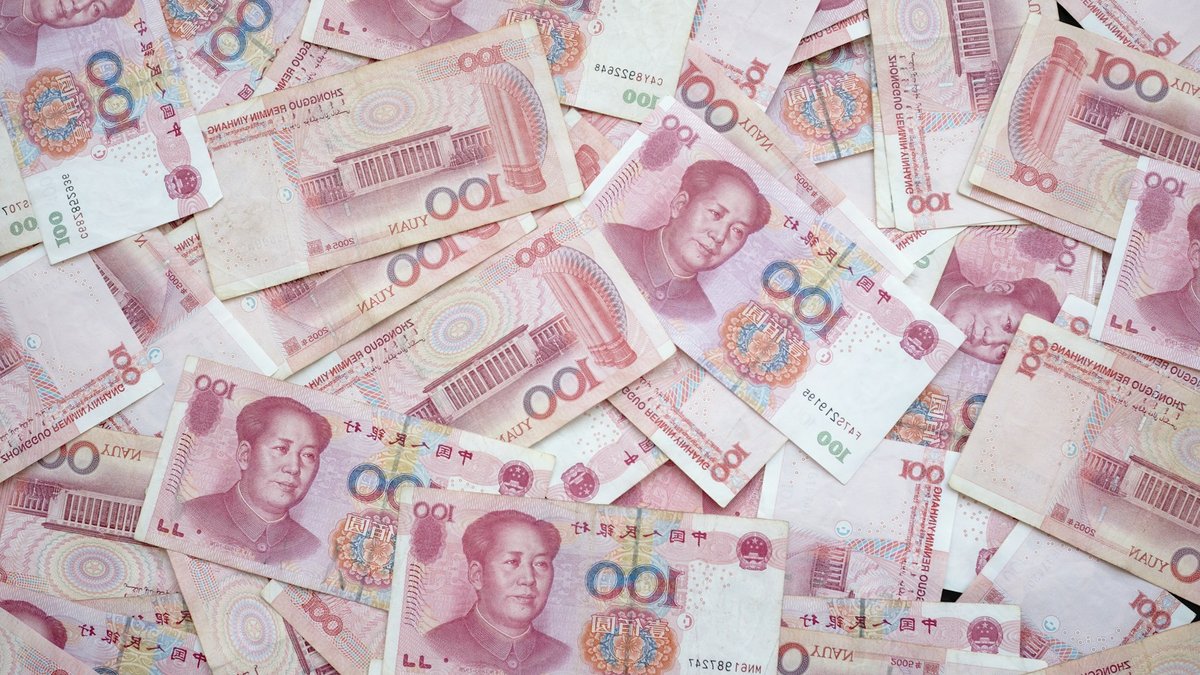
China’s economy expanded by 4.5% year-on-year in the fourth quarter of 2025, according to the National Bureau of Statistics (NBS). This growth rate is a slight deceleration from the 4.8% growth recorded in the third quarter, marking the slowest quarterly pace in three years.
Despite the cooling year-end performance, the Chinese economy grew by 5.0% for the full year of 2025, successfully hitting Beijing’s official target of “around 5%.” The achievement was largely driven by a record-breaking export engine that offset a persistent slump in the domestic property market and tepid consumer spending.
China’s Economy: A Tale of Two Sectors
The 2025 data highlights a growing divergence within the Chinese economy. On one side, high-tech manufacturing and exports reached historic highs; on the other, domestic demand and real estate continued to drag on the national average.
Chinese manufacturers defied significant global trade tensions, including renewed US tariffs under the Trump administration, by aggressively diversifying into emerging markets in Asia, Africa, and Latin America. The country reported a record trade surplus of $1.2 trillion in 2025, a 20% increase from the previous year.
Industrial output rose 5.2% in December, led by sectors like electric vehicles, shipbuilding, and green energy technology. However, Chinese households remained cautious, with property investment plunging 17.2% over the year and growth in retail sales slowing to just 0.9% in December.
Some analysts believe that China’s growth figures may be overstated. Zichun Huang, China economist at Capital Economics, said, “We think growth is weaker than official figures suggest.” According to Huang, the official numbers “overstate the pace of economic expansion” by at least 1.5 percentage points.
China has been trying to mend relations with some of its trading partners, including Canada, which recently announced that it is replacing its blanket 100% tariffs on electric vehicle imports with a more standard trade framework. The European Union (EU) and China also reached a consensus to replace punitive tariffs on Chinese electric vehicles with a “price undertaking” mechanism.
Related Post: Finding Global Trade Opportunities
Notably, China has a massive production overcapacity that has been driving its exports. Alicia Garcia-Herrero, chief economist for Asia Pacific at French bank Natixis, said, “China is effectively pushing growth through exports at a loss, and that is not sustainable.” Charu Chanana, chief investment strategist at Saxo, noted, “The fourth-quarter slowdown is the ‘tell’—suggesting China enters 2026 with fading momentum rather than a fresh upswing.”
China’s Stimulus Package
To maintain growth in 2026, Beijing is expected to pivot toward more aggressive fiscal stimulus. The central government has already signaled a “proactive” stance, likely focusing on strengthening the social safety net to encourage households to trade their “precautionary savings” for active consumption. The PBOC has cut interest rates on all structural monetary policy tools by 25 basis points (0.25%).
The PBOC has also allocated an additional 500 billion yuan (~$71 billion) to relending facilities, with a dedicated 1 trillion yuan quota specifically for private small-to-medium enterprises (SMEs). Zou Lan, PBOC Deputy Governor, signaled that there is still “ample room” for further cuts to benchmark interest rates and the Reserve Requirement Ratio (RRR) later in the year.
Beijing is extending its popular “trade-in” programs for consumer goods, issuing 62.5 billion yuan ($9 billion) in ultra-long special bonds to fund the first phase of 2026 subsidies. These funds incentivize households to replace aging automobiles, smartphones, and home appliances with newer, greener models. A massive 1.2 trillion yuan has been earmarked for technological innovation and industrial upgrades, prioritizing “new productive forces” like artificial intelligence (AI), robotics, and green energy.
China’s Ministry of Industry and Information Technology (MIIT) recently released an action plan for the high-quality development of industrial internet platforms (2026–2028). The plan aims to bridge the gap between China’s massive industrial data and the burgeoning power of AI, cultivating “new quality productive forces” across the country’s manufacturing sector. China’s 15th Five-Year Plan (2026-2030) signals a shift from innovation to widespread application and scaling.
China’s 15th Five-Year Plan has outlined a number of key objectives, including the development of industrial internet platforms and the promotion of technological innovation. The plan also emphasizes the importance of securing supply chains and ensuring the competitiveness of China’s manufacturing sector. As the country continues to implement these policies, significant developments are likely to occur in the coming months and years. The PBOC has cut the one-year relending rate from 1.5% to 1.25%, effective immediately.
China’s Focus on Technological Innovation
China’s 15th Five-Year Plan emphasizes the importance of technological innovation and industrial upgrades. The government has allocated significant funds to support the development of artificial intelligence, robotics, and green energy technologies. This focus on innovation is expected to drive growth and increase the country’s competitiveness in the global market.

Alibaba Stock Rises on T-Head Spin-Off Plans


