


Young leaders gather in Hong Kong for philanthropy program
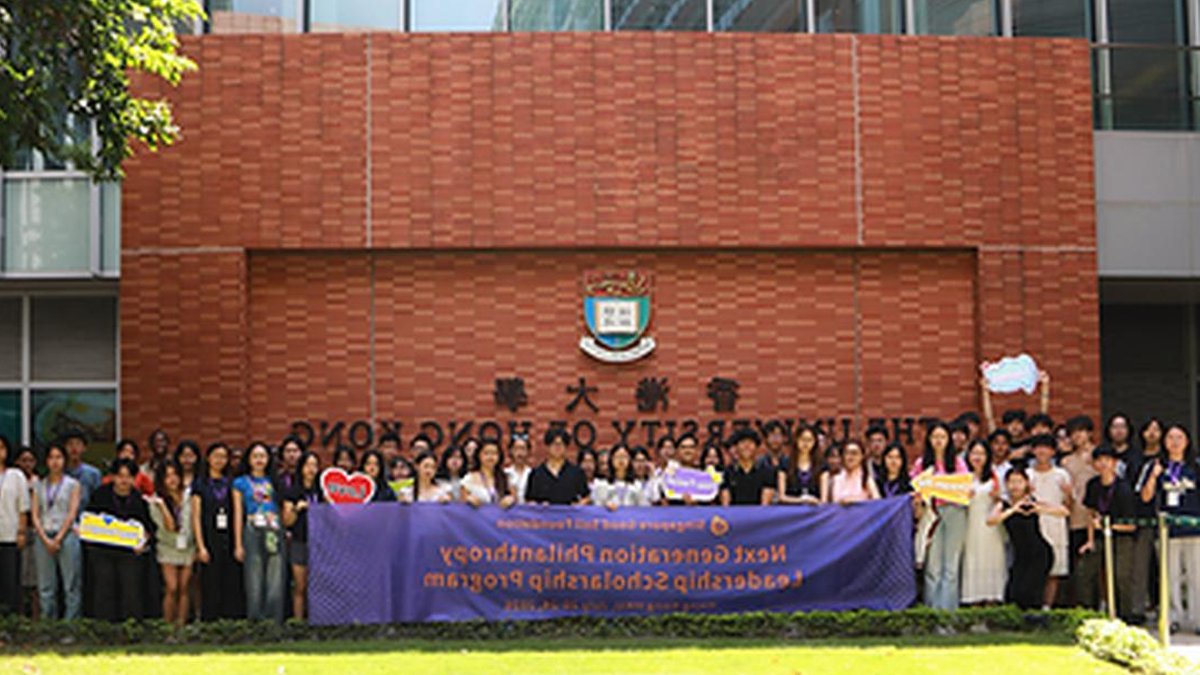
The Singapore Good Soil Foundation concluded its third Next Generation Philanthropy Leadership Program at the University of Hong Kong this week. This marked the first time the program took place outside Singapore. The five-day event, themed “Art + AI for Social Good,” attracted 58 in-person participants and 45 online attendees from seven countries, including the U.S., U.K., Kenya, and Thailand.
Participants examined how artificial intelligence, leadership, and social innovation could address real-world challenges. The approach differed from earlier editions held at the National University of Singapore and Nanyang Technological University.
From rural China to global classrooms
Three scholarship recipients from remote rural communities in China joined this year’s program. The foundation covered their travel, accommodation, and program fees, enabling them to study alongside peers from elite institutions. The initiative aimed to equip students to return to their communities as future leaders in philanthropy.
For the foundation, the focus extends beyond individual achievement. It seeks to create ripple effects by empowering individuals to become catalysts for positive change within their communities and beyond.
Related: Claire Taylor: England Cricket Legend and World Cup Winner
Alumni return as mentors
Nine former participants served as teaching assistants, supporting student teams throughout the program. Current students from Nanyang Technological University, Yale, and Xiamen University also contributed, highlighting how young people learn effectively from one another.
A first-year Yale undergraduate praised an improvisational speaking masterclass, saying it would have been valuable in high school. The foundation considered the feedback more meaningful than any award, as it reflected the program’s emphasis on developing independent thinking and communication.
Participants visited the Hong Kong Jockey Club, the Hong Kong Sikh community, and M+ Museum. These visits provided direct exposure to the city’s multicultural society and demonstrated how civic institutions help build compassion.
AI as a tool, not the goal
Interdisciplinary teams designed AI-driven solutions to social issues using human-centered design. Organizers repeatedly stressed that technology should serve people, not the other way around.
The foundation stated that AI is merely a tool. The future, it argued, will be shaped by the values of those who decide how to use it.
Related: Sorry, you have been blocked
Ongoing projects from previous cohorts demonstrate that education’s impact persists beyond the program itself. Sometimes, a single conversation or project can influence a lifetime.
As AI transforms society, the foundation contends the key question revolves around humanity. It suggests the answer lies in choices, compassion, and responsibility rather than innovation alone.
The foundation seeks to nurture a generation of leaders guided by integrity and a commitment to the common good.
The future, it believes, will be determined not by technology itself but by those who use it wisely.

Claire Taylor: England Cricket Legend and World Cup Winner


