


Jantar Mantar Protests Blur Reality and Perception
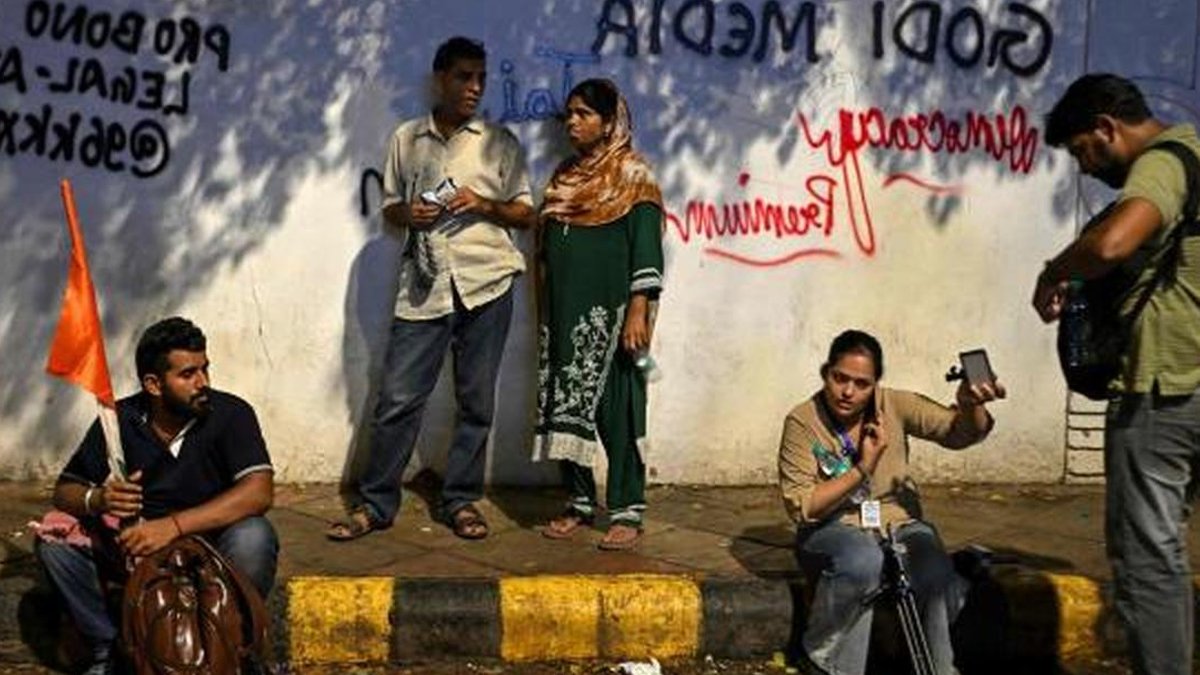
Last month’s leak of the National Eligibility cum Entrance Test sparked a wave of student protests that quickly converged on Delhi’s Jantar Mantar, turning a grievance over an exam into a broader test of democratic resilience.
From exam leak to nationwide sit‑ins
When the test papers surfaced in late May, students across India began a hunger strike, demanding accountability and a fresh examination. By early June, the self‑styled “Cockroach Janta Party”—named after a dismissive comment likening youth to pests—had organized a mass rally at the permitted protest zone of Jantar Mantar.
Police responded with tear‑gas canisters and baton charges, citing concerns over public order. An opposition MP was briefly detained during a clash, and several arrests followed. The intensity of the response marked one of the sharpest challenges to the government in recent years, as authorities grappled with the balance between maintaining stability and respecting the right to protest.
How social feeds shaped public perception
Most observers followed the events through short videos and algorithm‑curated feeds on smartphones. Two users scrolling the same platform at the same moment could arrive at opposite conclusions—one seeing a story of injustice, the other perceiving disorder and threat. Neither perspective was outright false; each reflected a different slice of the same unfolding reality.
The phenomenon mirrors what network scientists call the “majority illusion,” where a small group of highly connected accounts amplifies a view, making it appear as if it enjoys overwhelming consensus.
Recommendation engines prioritize content likely to retain attention, not necessarily material that is most accurate or balanced.
Automation bias further complicates matters. Studies show people tend to trust decisions made by machines, assuming they are neutral and exhaustive, even when the underlying data is biased. The result is a feed that subtly nudges users toward a particular narrative without their conscious awareness.
When videos of police using tear gas circulated alongside clips framing the police response as necessary control, each side reinforced its own narrative. Viewers rarely questioned the chronology or verified the source, trusting the algorithm’s selection as a proxy for truth.
Both the police actions and the student demonstrations are real; the divergence lies in how each is presented to the public.
Related: Power firms urged to speed up rooftop solar
In comparing the Jantar Mantar protests to earlier student movements, such as the 2019 fee hikes, the current episode demonstrates a higher degree of digital amplification.
The earlier protests relied more on traditional media coverage, whereas today’s events are filtered through personalized streams that can magnify either the government’s stance or the activists’ grievances, depending on the viewer’s prior behavior.
Calls for transparent dialogue
Experts argue that the onus is not solely on citizens to sift through feeds. Government authorities must also provide primary data and answer queries directly, rather than relying on monologues or selective statements.
Transparent communication could help counteract the distortion caused by algorithmic curation.
For those seeking a fuller picture, the recommendation is to treat any short clip as a headline, not a conclusion.
Consulting multiple outlets, reviewing official statements, and cross‑checking timelines can reveal a more subtle truth.
This practice applies to all age groups, as the tendency to accept a single, curated narrative cuts across generations.
As the protests continue to evolve, the interplay between on‑ground actions and digital representation will likely remain a focal point for analysts and policymakers alike.

Power firms urged to speed up rooftop solar


